Monday, February 6, 2017

Changes in Entertainment


Throughout the late nineteenth century and into the early twentieth century, entertainment and leisure became a large part of everyone’s lives. Because of cut work days, many people found themselves with time to have a social life, and unheard of thing until then. Urbanization caused many franchises to go across the United States, and new businesses open. A large rise in amusement parks, movie theaters, and shows resulted because of the high demand for entertainment.  

New York Metropolitan Opera House
Nickelodeon theaters were the most common type of theater. They were called nickelodeon theaters because admission would cost a nickel. (Encyclopedia Britannica). The theaters would play one to two shows a day continuously. “By 1910 they numbered 10,000, fueling a huge demand for silent films and projection equipment.” Because of the rise in films and filmmaking, the National Board of Censorship of Motion pictures, later renamed the National Board of Review, was created to ensure that movies were appropriate for the whole family. The National Board of Review was created in 1909 “originally founded to protest New York City Mayor George B. McClellan, Jr.’s revocation of movie picture exhibition licenses on Christmas Eve 1908” (Nationalboardofreview.org).
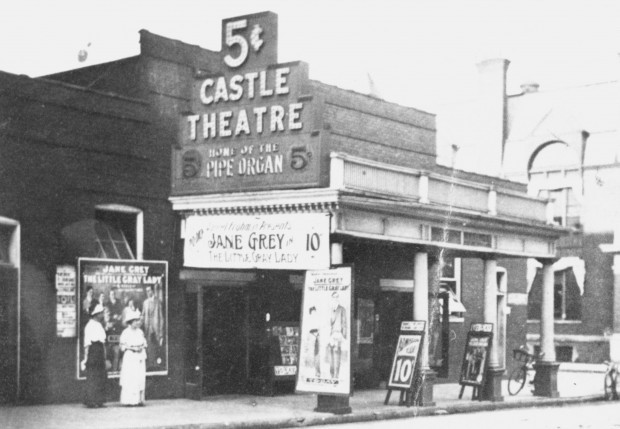

Nickelodeon Theatre 
With the change in leisure many pubs and saloons, previously just for men became more socially appropriate for women as well. With men and women able to be in the same club or bar, single people with out dates could hire a “taxi dancer” to dance with while at these events. As well as more opened saloons came nicer restaurants. Hotel dining, and new and old restaurants made renovations to them to make them nicer and more pleasing to dine in.
Taxi- Dancer on the Dance Floor

Another form of entertainment was vaudevilles. They were used for light entertainment containing 10 to 15 individual unrelated acts. These acts could be magicians, acrobats, comedians, trained animals, dancers and singers. From the start vaudevilles were mainly aimed at men, but in the late 1890s it became more for the family. Tony Pastor who wanted “straight, clean shows” (Encyclopedia Britannica) headed this change. 
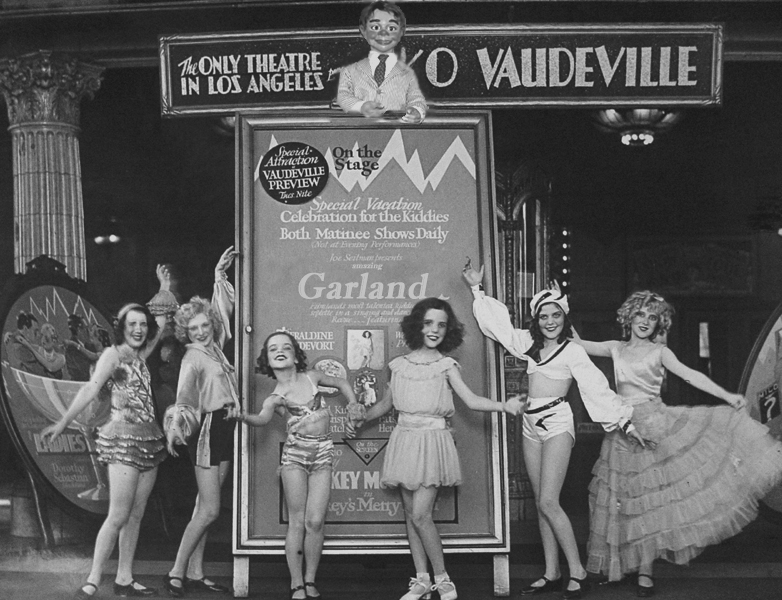
Children Acts in a Vaudeville


Many people spent their leisure time with each other and people watching. Between 1880 and 1890 the amusement park on Coney Island was built. The park included rides, vaudevilles, game booths, and movie theatres. Because of the popularity of Coney Island, many other people looked at it for inspiration to open other amusement parks in other parts on the country. "Park operators explicitly targeted courting couples and families and discouraged lone male" (JSTOR).One park was Water Shuts in Chicago. This park was designed by Paul Boyton and was open from 1894 to 1907.  Because of the success Water Chutes had, Pau Boyton opened a water park on Coney Island named “Sea Lion World,” that would change its name to Luna Park (Livinghistoryofillinois.com)

Coney Island


Works Cited

Mohun, Arwen P. “Designed for Thrills and Safety: Amusement Parks and the Commodification of Risk, 1880-1929.” Journal of Design History, vol. 14, no. 4, 2001, pp. 291–306. www.jstor.org/stable/3527258.

Rosenbloom, Nancy J. “Between Reform and Regulation: The Struggle over Film Censorship in Progressive America, 1909-1922.” Film History, vol. 1, no. 4, 1987, pp. 307–325. www.jstor.org/stable/3814986.

"nickelodeon". EncyclopƦdia Britannica. EncyclopƦdia Britannica Online.
EncyclopƦdia Britannica Inc., 2017. Web. 04 Feb. 2017

"vaudeville". EncyclopƦdia Britannica. EncyclopƦdia Britannica Online.
EncyclopƦdia Britannica Inc., 2017. Web. 04 Feb. 2017

"National Board of Review of Motion Pictures Records." THE NEW YORK PUBLIC LIBRARY ARCHIVES & MANUSCRIPTS. N.p., n.d. Web. 5 Feb. 2017. <http://archives.nypl.org/mss/2100#bioghist>.

"PAUL BOYTON'S WATER CHUTES PARK, CHICAGO, ILLINOIS 1894-1907." Livinghistoryofillinois.com. N.p., n.d. Web. 5 Feb. 2017.


Tuesday, December 13, 2016

Oakland Ghost Ship Fire


The Oakland Ghost Ship fire was caused by faulty electrical wiring in the performance stage. The warehouse did not have any fire sprinklers or smoke alarms and the exits were cluttered, causing confusion when people realized that the smoke was coming from a raging fire and not just smoke machines during the concert, which in the end claimed 36 lives. The fire was able to accelerate so quickly and remained for so long because of all the carpets, pianos, and other junk cluttering up the space, especially the exits. When firefighters entered the blazing building they were unaware of how many people were in there, and how to get around because of all the clutter and maze. In the end, they were not able to find the main staircase, which was undependable to begin with because it was made by the residents in the Ghost Ship. The Ghost Ship used to be a milk processing plant which turned into housing for people and had a performance area on the second floor, where on the night of the fire, there was a concert. The Oakland Ghost Ship fire is similar to the Triangle Factory fire because of the dangerous conditions that the people were in. The triangle factory had bad working conditions, and the ghost ship had all different types of booths, and items by the exits, causing a major fire hazard.


Ford Fessenden - Anjali Singhvi
http://www.nytimes.com/interactive/2016/12/12/us/oakland-warehouse-ghost-ship-fire.html?_r=0


Julia ProdisSulek - Matthias Gafni
http://www.eastbaytimes.com/2016/12/11/oakland-fire-ghost-ship-last-hours/

Monday, November 21, 2016

Fritz Scholder- Native American Visual Artist


 http://fritzscholder.com/gallery.php
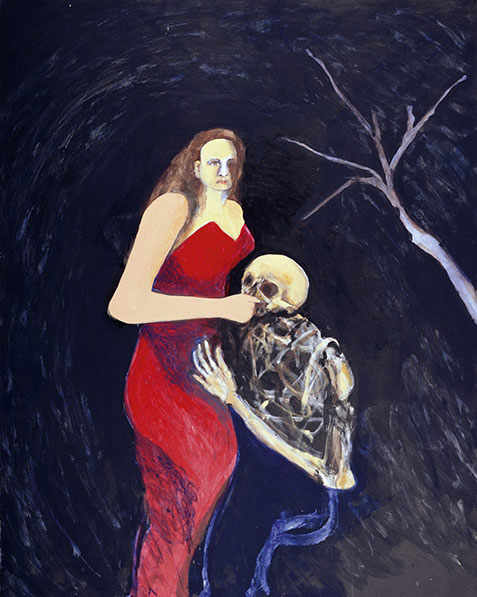
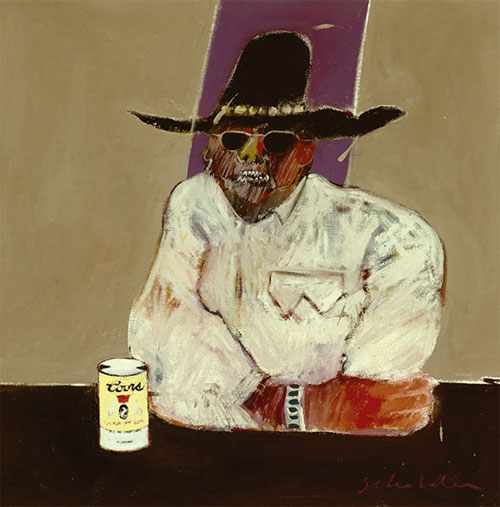
Fritz Scholder was a visual artist who was 1/4 Native American, descending from the LuiseƱo tribe. Scholder was recognized as an important figure who changed the perspective of Native American life and art. "His target was the loaded national cliche and guilt of the dominant culture" (http://fritzscholder.com/biography.php). Fritz's art contained psychological disturbing motifs with skulls, crucification, and the "real Indian," His paintings broke away from the typical tribal depictions of Native Americans and continually contained the rejection of white culture by the Indians (http://www.nmai.si.edu/static/exhibitions/scholder/introduction.html). Scholder's paintings were controversial but because of him not being raised Native American, his perspective of the Native American life could not be denied.

http://fritzscholder.com/gallery.php

Scholder, Fritz. Indian with Beer Can. 1969. Painting. Smithsonian, n.p

I want to know why he made his paintings so controversial. His grandmother and previous ancestors were Native American and he, himself, is of native american decent, so why would he make the paintings dark and unsettling? 


Lane, Anne Marie. "Fritz Scholder: Indian/Not Indian." Library Journal, 1 Feb. 2009, p. 70. General OneFilego.galegroup.com/ps/i.do?p=GPS&sw=w&u=avl_randsch&v=2.1&id=GALE%7CA199600217&it=r&asid=6ec89650553886dd156e595066d40820. Accessed 21 Nov. 2016.


http://www.nmai.si.edu/static/exhibitions/scholder/introduction.html


http://fritzscholder.com/biography.php

Wednesday, November 9, 2016

Native American Class Work- 11/09/16


In class, we read a text about Native Americans from the 1800’s. The text consisted of how the Indians lived, what they lived in, and what they looked like. The descriptions of the Native Americans made them seem like they were bad, inhumane people, that kept the scalps of their enemies. The words savage and savagery were used often in pair with the Native Americans. Savage is defined as an uncivilized person and savagery means being fierce and cruel as well as uncivilized. Although the text does refer to the Native Americans as Indians, when talking about them killing people and burning down things, they suddenly become savages.  If I were an American student reading this text as part of my schoolwork, it would greatly shape the way I viewed Native Americans. Assuming that I haven’t had any contact with them, after reading this text, I would fear them and think that all they wanted from my family, my town, and me was to fight and kill us all. Yes, there is the story of the Native American princess Pocahontas who saved John Smith, but even the text said that there was no affirmation that the story was true. Having no prior knowledge of Native Americans and their behavior, being assigned the reading would make me fear Native Americans and not want them around.

Monday, October 31, 2016

Letters from the West- 10/31/16

In the letter from Clay County Nebraska from a man to his wife, he continuously talks about buying land from himself and his family. As well, he talked about all the different kinds of people out west that are having to sell their land or just give it away because of sickness and the inability to take care of the land due to lack of funds. Some interesting things that stood out were how cheap so much land was, how he called his wife "ma," and how he was able to leave his wife and new baby girl just to go try and get land. Not actually obtain land, but continuously having to go to the Land Office and see if he can have land, or if theres any available that is suitable. The letters meant so much to loved ones back home because, especially in this instance, this man left his wife and child at home in the hope of buying large amounts of land only having the letters to give updates and receive updates from his family, friends, and loved ones.

Letters From Captain William Becknell